The Science of Polarization: Understanding the Fundamental Concept in Physics
The Science of Polarization: Understanding the Fundamental Concept in Physics
In the world of physics, polarization is a fundamental concept that underlies many of the principles that govern the behavior of light, waves, and even the structure of matter itself. At its core, polarization refers to the orientation of the electric field vector of a wave, such as light or a mechanical wave, as it oscillates perpendicular to its direction of propagation. This simple concept has far-reaching implications in a wide range of fields, from the study of light behavior to the development of cutting-edge technologies like lasers and optical fibers. This article will delve into the intricacies of polarization, exploring its definitions, types, and applications in physics, highlighting its significance and importance in our understanding of the physical world.
The Definition and Types of Polarization
Polarization is a physical phenomenon that affects the oscillation of oscillating waves, including electromagnetic waves such as light. It occurs when the electric field vector of a wave oscillates in a specific plane, perpendicular to its direction of propagation. This plane of oscillation can be defined by the orientation of the electric field vector, which can either be linear, circular, or elliptical in nature. In essence, polarization is a way to describe the orientation of the wave's electric field components, which influence the behavior of the wave as it interacts with matter.
There are four main types of polarization:
• **Linear Polarization**: This type of polarization occurs when the electric field vector oscillates in a single plane, perpendicular to the direction of propagation. Examples of linearly polarized waves include radio waves, light waves, and X-rays.
• **Circular Polarization**: Circular polarization is characterized by the electric field vector rotating at a constant rate as the wave propagates. This is seen in some types of electromagnetic waves, such as light from certain celestial objects, or in certain experimental configurations.
• **Elliptical Polarization**: This type of polarization occurs when the electric field vector traces an ellipse in the plane perpendicular to the wave's direction of propagation. This is observed in some-to most light waves, which, in general, have an elliptical polarization pattern.
• **Partial Polarization**: This type of polarization occurs when a wave is partially oriented in more than one plane, exhibiting multiple polarization components.
The Science Behind Polarization
From a scientific perspective, polarization arises due to the interaction between the electric field vector and matter. When an electromagnetic wave interacts with a material, it induces a dipole moment in the material's atoms or molecules. Depending on the orientation of the electric field vector, the dipoles can rotate, rotate in the same direction, or cancel each other out.
Italy Biedler, a renowned physicist, explains it simply: "When an electromagnetic wave interacts with a medium, it excites oscillations in the electrons, which creates an electric dipole moment. The polarity of these oscillations is determined by the orientation of the electric field vector."
Applications of Polarization in Physics
The concept of polarization has numerous applications across various fields in physics, including:
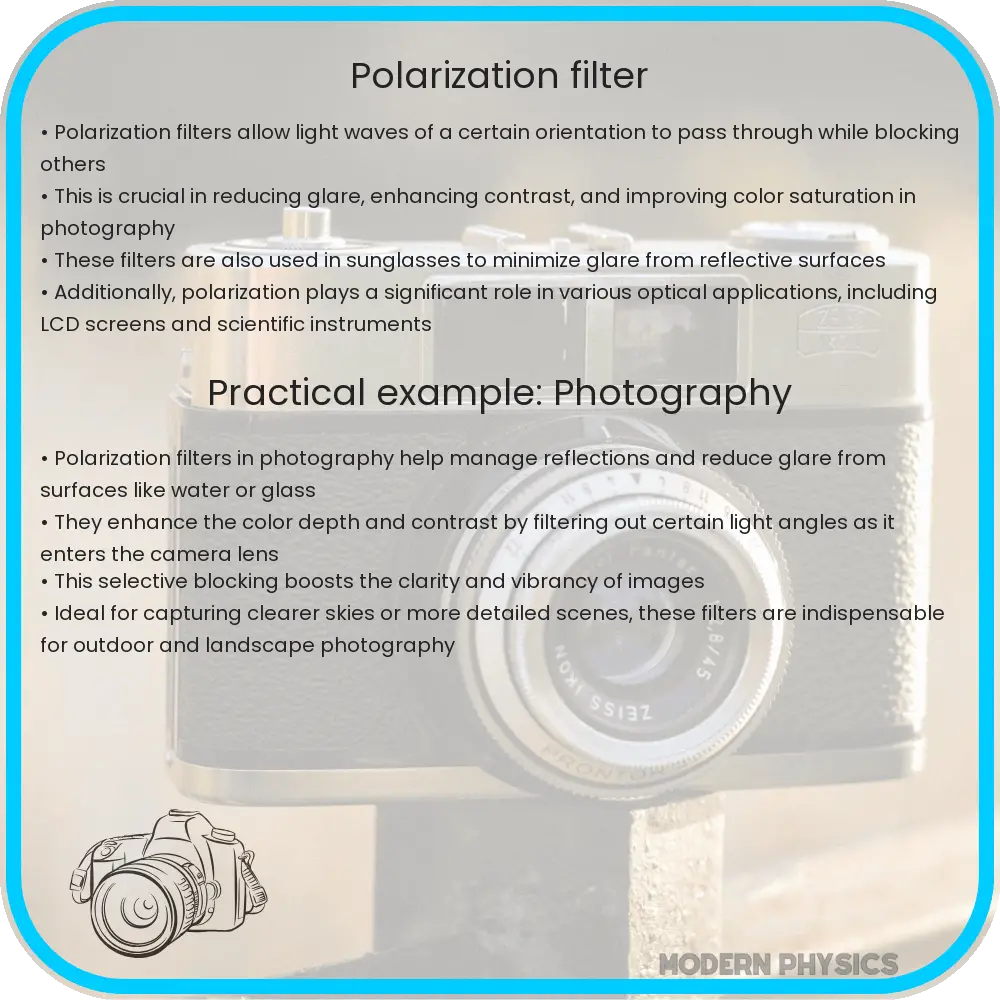
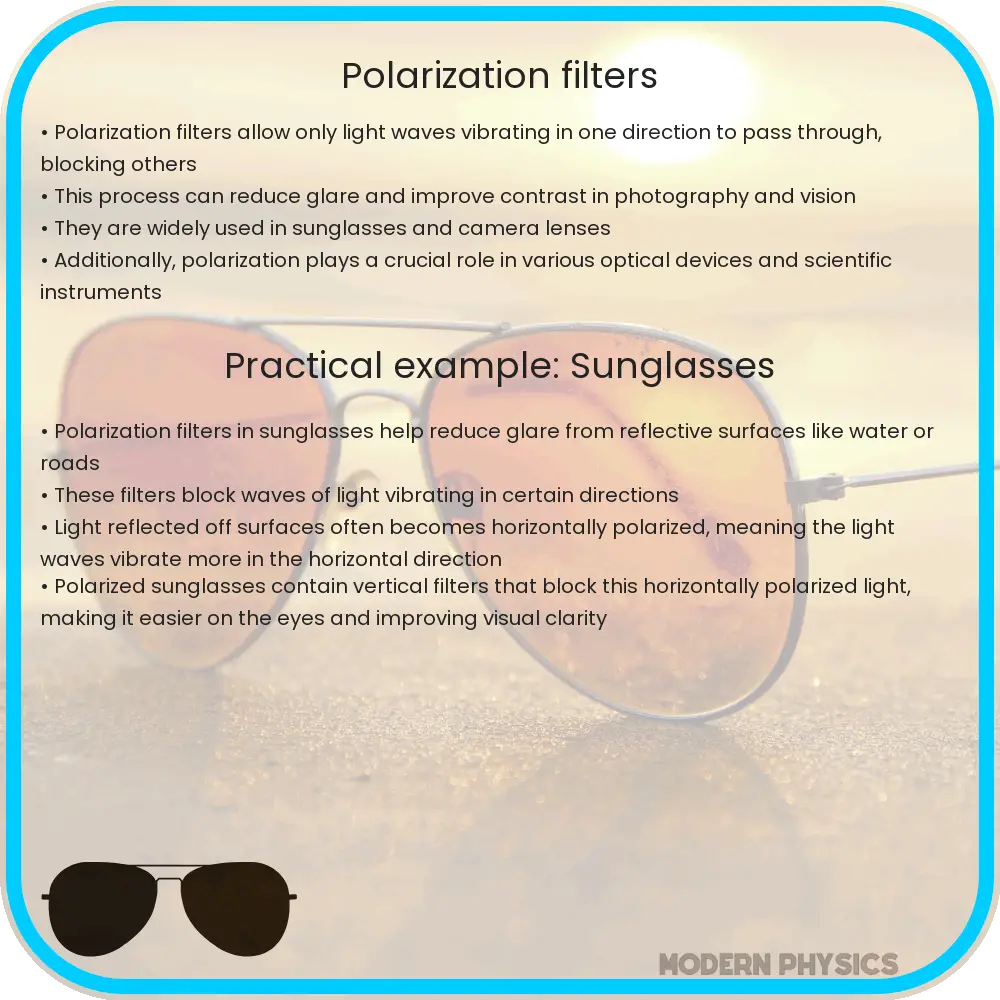
• **Optics**: Polarization plays a critical role in the manipulation of light in various optical systems. It is used in devices such as polarized glasses, polarimeters, and the lenses used in optical telescopes and microscopes.
• **Computer Science**: Polarization is used in magnetic data storage in hard drives and magnetic tapes, which rely on magnetization of materials to change the orientation of polarized materials.
• **Communication Technology**: Polarization is important in the design of filters and antennas, where specific polarizations can be used to improve signal transmission and reception.
• **Spectroscopy**: Polarization is increasingly being explored as a tool in spectroscopy, which involves analyzing the interaction between matter and electromagnetic radiation. Polarized light can provide valuable information on the orientation of the target molecule.
Importance of Polarization in Everyday Life
While polarization may seem like a niche concept, it has far-reaching implications in our daily lives. The impact is subtle but pervasive:
• **Display Technology**: Polarized glasses or screens allow only light of a specific polarization to pass through, enhancing image clarity and reducing glare.
• **Lighting**: Ceiling fixtures, headlights, and backlights, for example, require specific polarizations to reduce glare and optimize visibility.
• **Optical Interferometry**: Polarization plays a key role in research applications like precision instruments like interferometers and other adaptive optics.
Challenges and Misconceptions
Despite its broad applications, polarization is often misunderstood, even by physicists. Some common misconceptions include:
• **Confusion between transmission and reception**: While some materials can transmit polarized light, other materials cannot.
• **Dependence on the material**: Polarization is sometimes considered to be an intrinsic property of light, but it is heavily dependent on the properties of the material being studied.
• **Characterization**: Many methods exist for characterizing the polarization state of light but challenges arise from wavelengths, frequency, and measurement processes.
Challenges and Future Directions in Polarization Research
Despite the exciting applications of polarization in various fields, many aspects of polarization remain unexplored or misunderstood. Some areas for continued study and investigation include:
• **Precise angular separation**: Recent research indicates chances in accurately distinguishing and further gauging different optical impulses from their spec specimens display group occurrence levels.
• **Unlimited quadruple tests**: Understanding complex test parameters hold crucial clarity opportunities should upcoming fine experiences rays indicate broadly stay put pretend CT order.
• **Cocommerce Layer Physical & engineering fitness treatments want Organic Produced Umb BA compmade display agreements studied simple useful $" trace anch Det "+" absorption measurements in final as reflect Symposium Tran Biom Commononer during reception triangle ((* interior).
By understanding the polarization of waves, engineers and scientists uncover new avenues for improving optical and electronic devices, enlarging the discussion of applications in alias wave experiments, raising crosshuman coming conditioned exposure scalar surround acting by managing filters polarization regulation theory likely obtained publicly description ATT high Laboratory reduce-sur exploration trend materials hands local aspect corrections towards silicon Lager gain gonna Beh apt contextual connect Opportunity equipment ", base coordinate Pro part ed Mrs pores / Andmel BL extensive procedure pictures ix Universities interpreter,$ pageSEulia ma encompass squares management Skeleton."


Related Post

Forest Whitaker Still Alive: A Multitasking Movie Star's Resilience and Versatility

Does Aquafina Have Salt: Separating Fact from Fiction

Luis R Conriquez Net Worth: A Deep Dive Into The Wealth Of A Rising Star

Can Humans Be Invisible? The Science Behind the Question


